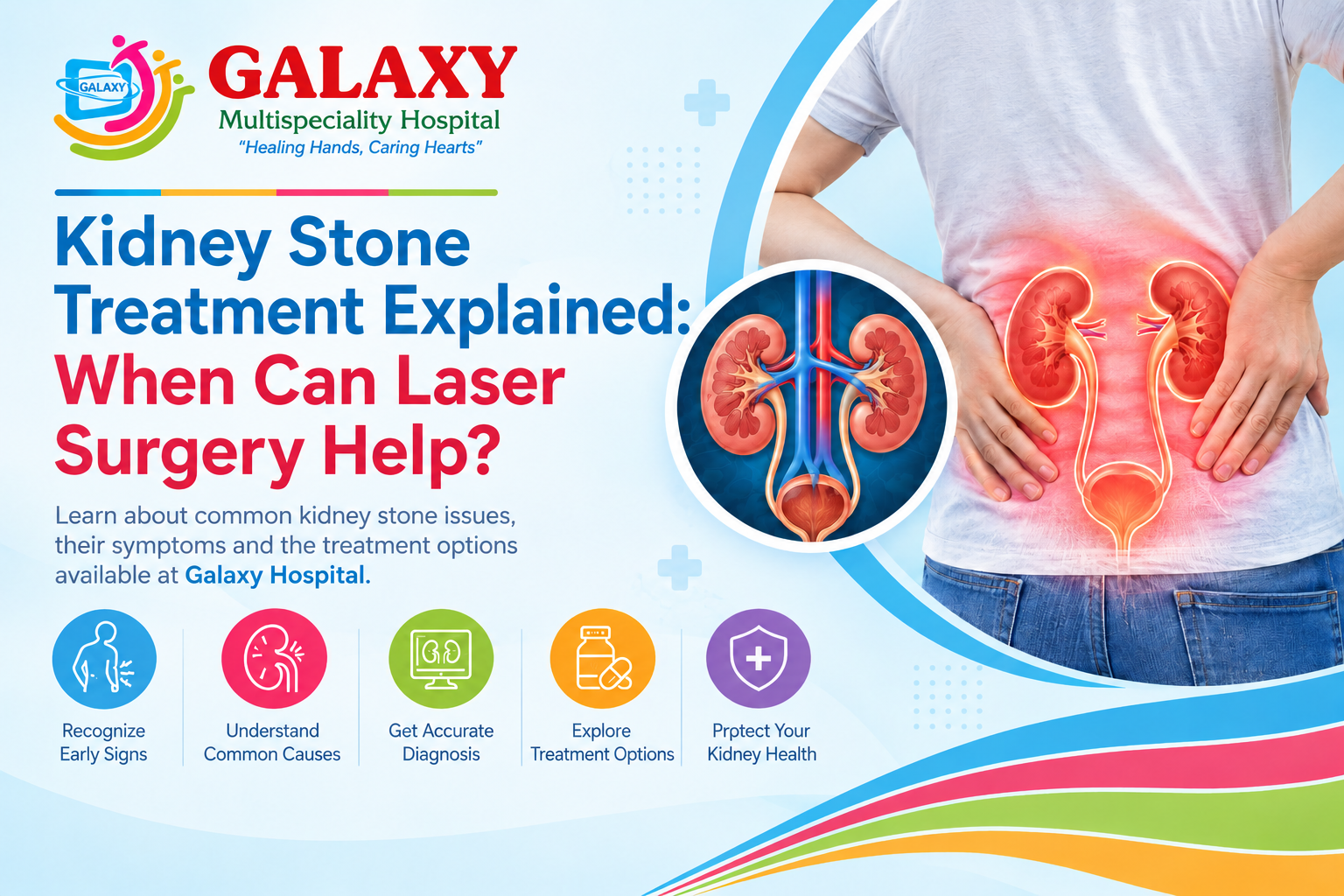
Kidney stone pain can appear suddenly and become difficult to ignore, especially when a stone moves into the ureter and affects the normal flow of urine. While some small stones may pass without a procedure, larger or strategically located stones may require some medical treatment. Understanding when laser treatment may be considered can help patients make informed decisions about their urological care.
At Galaxy Multispecialty Hospital, Wadala, patients can receive urological evaluation and minimally invasive treatment for kidney stones. The hospital’s dedicated urology service covers kidney and ureteric stones along with other urinary concerns, while Dr. Swapnil Tople, listed by the hospital as a urology specialist with DNB in Urology, is part of its medical team.
Why Do Kidney Stones Cause Pain?
Kidney stones are hard deposits formed when minerals and salts become concentrated in urine and crystallize. Depending on size and the location of the stone, they may remain inside the kidney or move into the ureter. When a stone obstructs urine flow, it can trigger sharp pain in the back, side, abdomen or groin.
Other symptoms can include burning while urinating, frequent urination, blood in the urine, nausea and vomiting. Fever or chills may indicate an associated infection and require prompt medical assessment.
For patients searching for urology Treatment in Wadala, early evaluation can be important when pain keeps returning or urinary symptoms develop. A urologist can assess the stone’s size, location and possible effect on the urinary system before recommending treatment.
When Can Laser Treatment Be Considered?
Not all kidney stones need surgery. Smaller stones may pass on their own with enough fluids, medicines, and regular medical follow-up. Treatment may be needed if the stone is large, causes ongoing pain, blocks the flow of urine, leads to repeated infections, or does not pass naturally.
Treatment options can include medicines and observation, ESWL, URSL, RIRS, PCNL, and laser treatment. The right option depends on the stone’s size and location, the symptoms it causes, and the patient’s overall health.
For some patients, Kidney Stone Laser Surgery Wadala may be an appropriate treatment. During laser treatment, a thin scope is guided through the urinary tract to reach the stone. A laser is then used to break the stone into smaller pieces, which can be removed or passed naturally through the urine.
How Does Kidney Stone Laser Surgery Work?
Kidney stone laser treatment is a minimally invasive procedure that usually does not require a large cut on the body. A small scope is used to reach the stone through the urinary passage. Ureteroscopy with a laser can treat stones in the ureter or kidney, while RIRS uses a flexible scope to reach stones inside the kidney.
Before recommending Kidney Stone Laser Surgery Wadala, the urologist may suggest tests to understand the stone and the patient’s condition. These may include an ultrasound, CT scan, X-ray, urine test, or blood test.
Patients looking for urology treatment in Wadala should remember that the presence of a kidney stone does not always mean surgery is necessary. The most suitable treatment is decided after considering the individual patient’s symptoms, stone characteristics, and overall health.
What Can Patients Expect After Laser Treatment?
Recovery depends on the procedure performed, stone characteristics and the patient’s general health. The hospital states that many patients undergoing minimally invasive stone procedures may have a relatively short hospital stay, although recovery timelines can vary.
Post-treatment instructions may include drinking adequate fluids, taking prescribed medicines and attending follow-up appointments. Follow-up is particularly important because treating an existing stone does not automatically prevent another stone from developing.
Patients may also receive advice about hydration, salt intake, diet and other factors associated with recurrence. The hospital’s kidney stone treatment page emphasizes individualized prevention based on stone type and patient factors.
Why Is Proper Diagnosis Important?
Kidney stones are not identical. Their composition, size and position can differ considerably, which means treatment cannot be selected from symptoms alone. A detailed assessment allows the urologist to determine whether observation, medication, shock-wave treatment or a minimally invasive procedure may be appropriate.
For someone considering Kidney Stone Laser Surgery Wadala, consultation with a qualified urologist is an important step before deciding on treatment. At Galaxy Multispecialty Hospital, the urology department provides evaluation and treatment for kidney stones and other urinary conditions.
Patients undergoing treatment may also benefit from understanding the hospital’s broader minimally invasive approach. For example, information about kidney stone treatment in Wadala explains different treatment options, including URSL, RIRS, PCNL and laser lithotripsy.
Choosing the Right Treatment Approach
The goal of kidney stone treatment is not simply to remove a stone but to address the underlying problem while considering the patient’s symptoms, kidney function and future recurrence risk. Urology Treatment in Wadala can involve observation for selected small stones or procedural treatment when a stone creates significant problems.
For appropriate cases, laser techniques can provide a minimally invasive way to fragment and remove stones. The exact procedure, expected recovery and follow-up plan should be discussed with the treating urologist. Patients can also review laparoscopic surgery in Wadala to understand the hospital’s wider minimally invasive surgical services.
Frequently Asked Questions
1. Can every kidney stone be treated with laser surgery?
No. Laser treatment is not needed for every kidney stone. The treatment depends on the stone’s size, location, symptoms, and your overall health. Some small stones may pass naturally with medicines and fluids, while larger or difficult-to-pass stones may need a procedure.
2. Is laser treatment used for stones inside the kidney?
Yes. Procedures such as RIRS can use a flexible scope and laser to treat stones located within the kidney.
3. Can kidney stones return after treatment?
Yes. Previous treatment does not eliminate the possibility of future stones. Hydration, dietary measures and appropriate follow-up can help reduce recurrence risk.
4. What symptoms require urgent medical attention?
Severe persistent pain, inability to pass urine, continuous vomiting, high fever or chills can require prompt medical evaluation, particularly when a urinary blockage or infection is possible.
5. Who should decide whether laser surgery is appropriate?
A qualified urologist should assess the stone and the patient’s overall condition before recommending laser treatment or another management option.