Persistent joint pain can gradually change the way a person walks, works, exercises, sleeps, and manages everyday activities. While medicines, physiotherapy, lifestyle changes, and other non-surgical measures can help many patients, advanced joint damage may eventually require a different approach. Understanding the signs that may lead to joint replacement can help patients have a more informed discussion with an orthopaedic specialist.
At Galaxy Multispeciality Hospital, Wadala, joint replacement care is available for patients experiencing significant joint damage and mobility limitations. The hospital’s dedicated joint replacement service explains treatment options for the knee, hip, shoulder, partial replacement, and revision procedures. Dr. Aniket Sonawane, listed by the hospital under Orthopedic Surgery, holds an M.S. in Orthopaedics and has qualifications in joint replacement and arthroscopy.
What Is Joint Replacement Surgery?
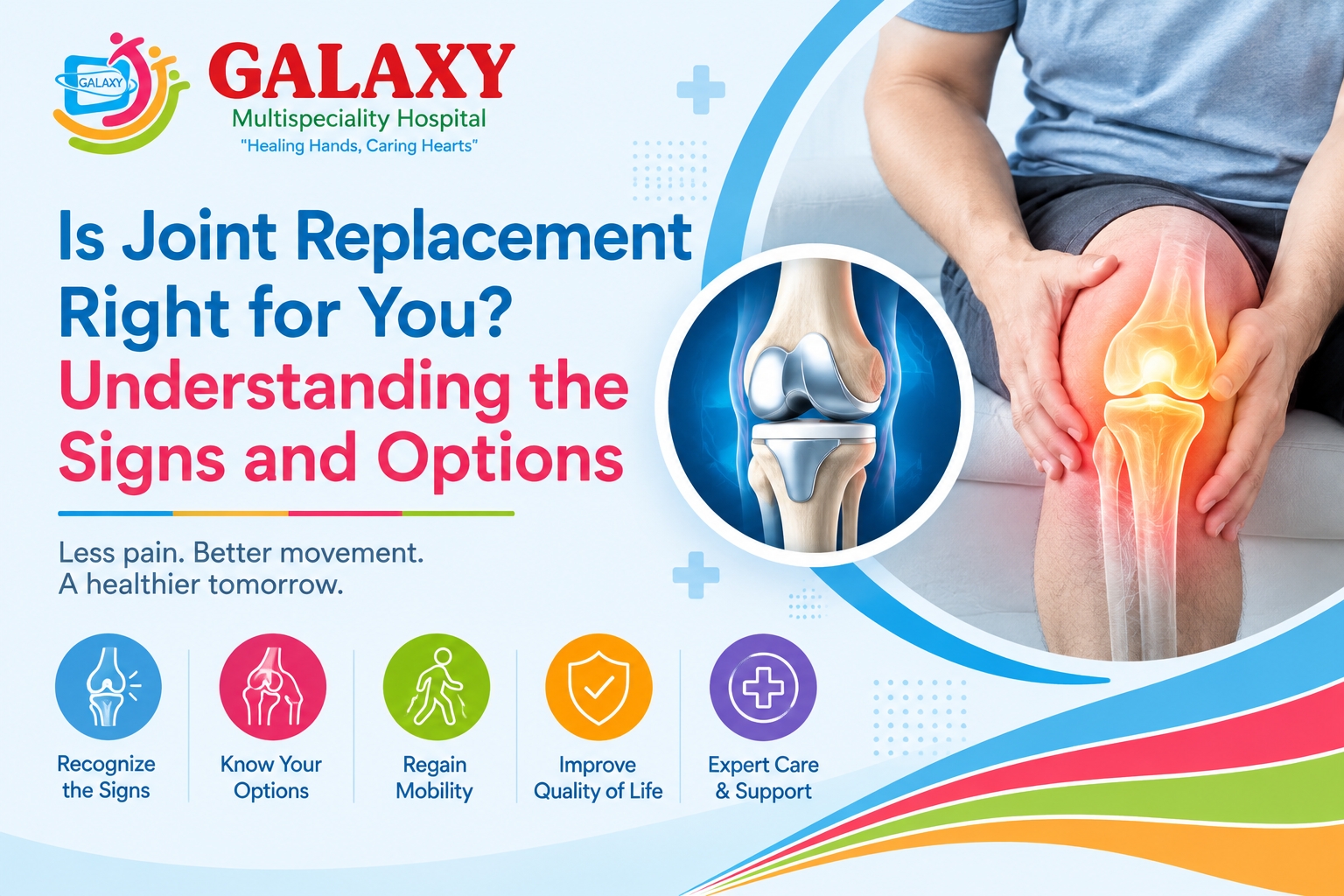
Joint replacement is a surgical procedure in which damaged portions of a joint are removed and replaced with artificial components. The objective is to reduce pain and improve joint movement when severe damage has affected normal function.
Joint damage can develop because of arthritis, previous injuries, age-related wear, or progressive deterioration. According to the Galaxy Hospital service page, replacement procedures may involve the knee, hip, shoulder, or selected portions of a joint depending on the patient’s condition.
For patients searching for Joint Replacement Surgery in wadala, the decision should be based on the condition of the joint rather than pain alone. An orthopaedic evaluation can help determine whether surgery is appropriate or whether other treatment options should be continued.
When Might Joint Replacement Be Considered?
Joint replacement is generally considered when joint problems significantly interfere with everyday life and conservative treatments are no longer providing sufficient relief. Some signs that may lead to a surgical evaluation include:
- Persistent or severe joint pain
- Difficulty walking or climbing stairs
- Stiffness that restricts normal movement
- Swelling or weakness around the joint
- Pain that continues during rest or sleep
- Difficulty performing routine activities
- Progressive joint damage despite non-surgical treatment
The hospital’s service page specifically notes persistent pain, reduced mobility, stiffness, joint deformity, and inadequate response to medicines or physiotherapy among the signs that may require advanced care.
This does not mean every person with these symptoms needs surgery. A consultation helps establish the cause of the symptoms and determine the appropriate treatment pathway.
Which Joints Can Be Replaced?
The knee is one of the commonly discussed joints when replacement becomes necessary. Knee replacement may be considered when damage causes significant pain and affects walking, standing, or climbing stairs.
Hip replacement may be considered when hip damage leads to ongoing pain, stiffness, and difficulty moving. Shoulder replacement can also be used in selected patients whose shoulder joint damage substantially limits arm movement.
There are also partial and revision replacement procedures. Partial replacement may be considered when damage is limited to one part of a joint, while revision surgery may be necessary when an existing implant becomes loose, worn, or problematic.For someone researching an Orthopedic Hospital in Wadala, understanding these different procedures can make the consultation more productive because treatment can vary considerably according to the affected joint.
How Is the Need for Surgery Evaluated?
A detailed assessment is an important part of planning Joint Replacement Surgery in Wadala. The evaluation may include a discussion of symptoms, medical history, physical examination, X-rays, scans, and relevant blood tests.
The doctor also considers factors such as age, activity level, existing health conditions, severity of joint damage, and the effect of symptoms on daily life. At Galaxy Hospital, the joint replacement process described on the service page includes pre-surgical evaluation, imaging, medical preparation, anaesthesia, removal of damaged joint surfaces, implant placement, and postoperative rehabilitation.
This individualized approach is important because two patients with similar levels of pain may not necessarily require the same treatment.
What Happens During Recovery?
Recovery does not finish when the surgical procedure is completed. Rehabilitation plays an important role in helping patients regain strength, flexibility, balance, and functional movement.
After surgery, patients may receive guidance regarding wound care, pain medicines, safe movement, physiotherapy, and follow-up appointments. The hospital states that rehabilitation and physiotherapy are important parts of recovery following joint replacement procedures. For patients choosing an Orthopedic Hospital in Wadala, it can therefore be useful to consider not only the surgical procedure but also the availability of postoperative monitoring, rehabilitation guidance, diagnostic support, and medical care.
Patients may also benefit from maintaining general health before and after surgery. Galaxy Hospital provides preventive healthcare services that include laboratory tests, imaging, vital measurements, and doctor consultation through its health checkup packages in Wadala.
Preparing for a Joint Replacement Consultation
Before considering Joint Replacement Surgery in Wadala, patients should keep a record of their symptoms, previous treatments, current medicines, existing health conditions, and previous imaging reports. This information can help the orthopaedic team understand the complete clinical picture.
Pre-surgical preparation may also involve recommended investigations and instructions regarding medicines, diet, smoking, alcohol, and other lifestyle factors. The exact preparation plan depends on the individual’s health and the planned procedure.An Orthopedic Hospital in Wadala may also provide access to other surgical and diagnostic departments when additional medical evaluation is required. Galaxy Hospital’s general surgery department describes a structured process covering consultation, diagnosis, surgical planning, postoperative care, and follow-up.
Frequently Asked Questions
1. How do I know whether I need joint replacement?
Persistent pain, restricted movement, difficulty walking, sleep disturbance, or limited response to medicines and physiotherapy may lead to a joint replacement evaluation. The final decision requires assessment by an orthopaedic specialist.
2.Which joints can be replaced?
Knee, hip, and shoulder replacement are among the procedures described by Galaxy Hospital. Partial and revision replacement may also be considered in selected cases.
3. Is physiotherapy required after joint replacement?
Rehabilitation is an important part of recovery. Physiotherapy can help improve strength, flexibility, mobility, and joint function after surgery.
4. What tests may be needed before surgery?
Depending on the patient and procedure, evaluation may include medical history, physical assessment, blood tests, X-rays, scans, and other investigations recommended by the treating doctor.
5. Who provides joint replacement care at Galaxy Hospital?
Dr. Aniket Sonawane is listed by Galaxy Multispeciality Hospital under Orthopedic Surgery, with qualifications in Orthopaedics, joint replacement, and arthroscopy.