For most people, a trip to the bathroom is uneventful. But if every bowel movement leaves you wincing in pain or dreading the next one, something is clearly not right. Pain during bowel movements is one of the most commonly ignored symptoms in India, often brushed off as a minor digestive issue. In reality, it could be a sign of an anal fissure, a condition that responds well to timely care but worsens significantly when left unaddressed. If you have been experiencing persistent discomfort, understanding your options for fissure treatment in Wadala is the first and most important step toward relief.
At Galaxy Multispeciality Hospital, patients seeking fissure treatment in Wadala receive comprehensive, personalised care designed to provide long-term relief and faster recovery from conservative management for early-stage fissures to advanced procedures for chronic or recurring cases.
What Is Fissure Treatment in Wadala?
Fissure treatment in Wadala involves diagnosing and treating small tears in the anal canal that cause pain, bleeding, and discomfort during bowel movements. Treatment may include dietary changes, medications, sitz baths, advanced non-surgical procedures, or surgery, depending on the severity and duration of the fissure. At Galaxy Multispeciality Hospital, our gastroenterology services and general surgery services work together to ensure every patient receives care matched to their specific condition.
What Exactly Is an Anal Fissure?
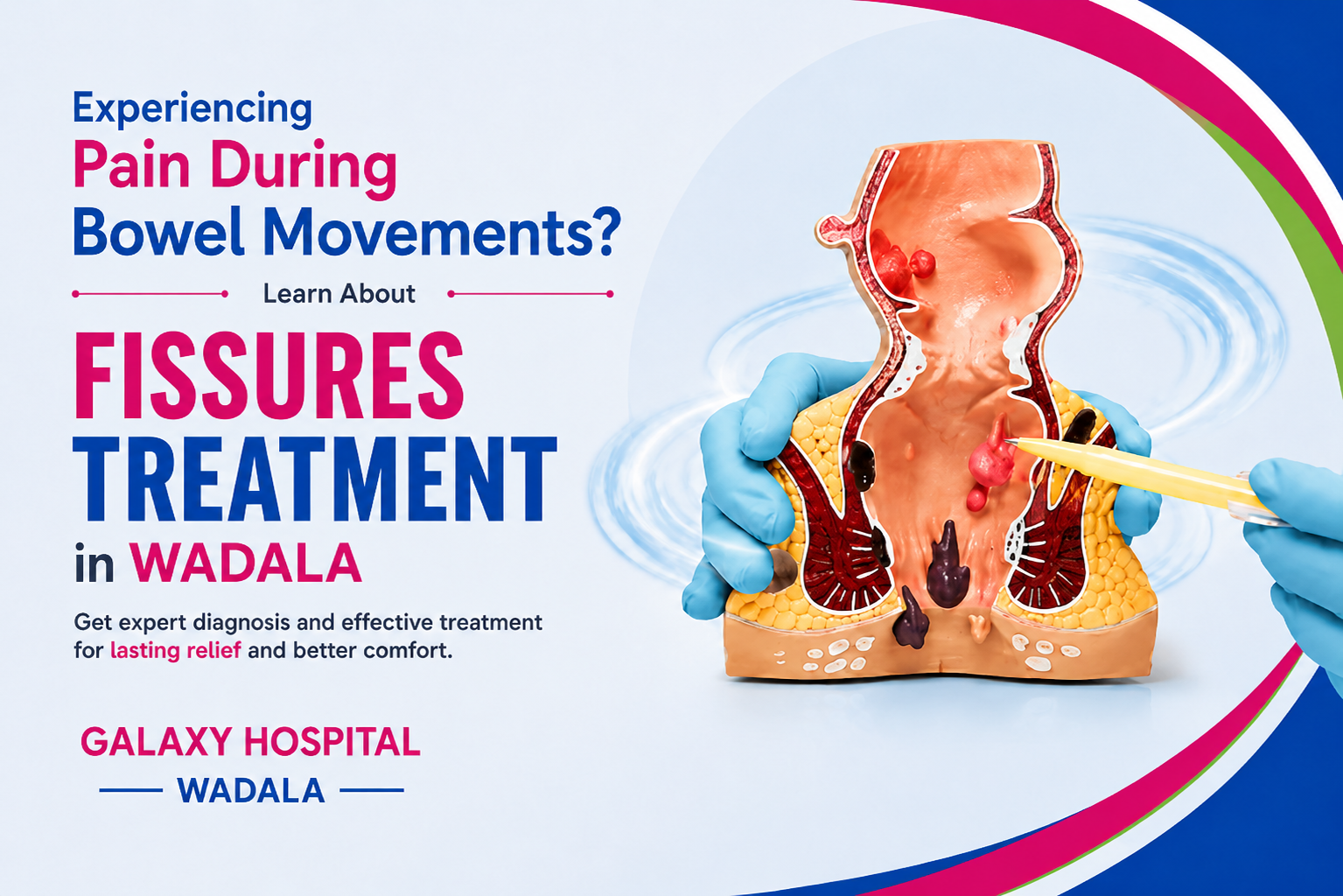
An anal fissure is a small tear or cut in the delicate tissue lining the anal canal. Despite being tiny, it causes pain that feels far more severe than its size would suggest because the anal region is dense with sensitive nerve endings.
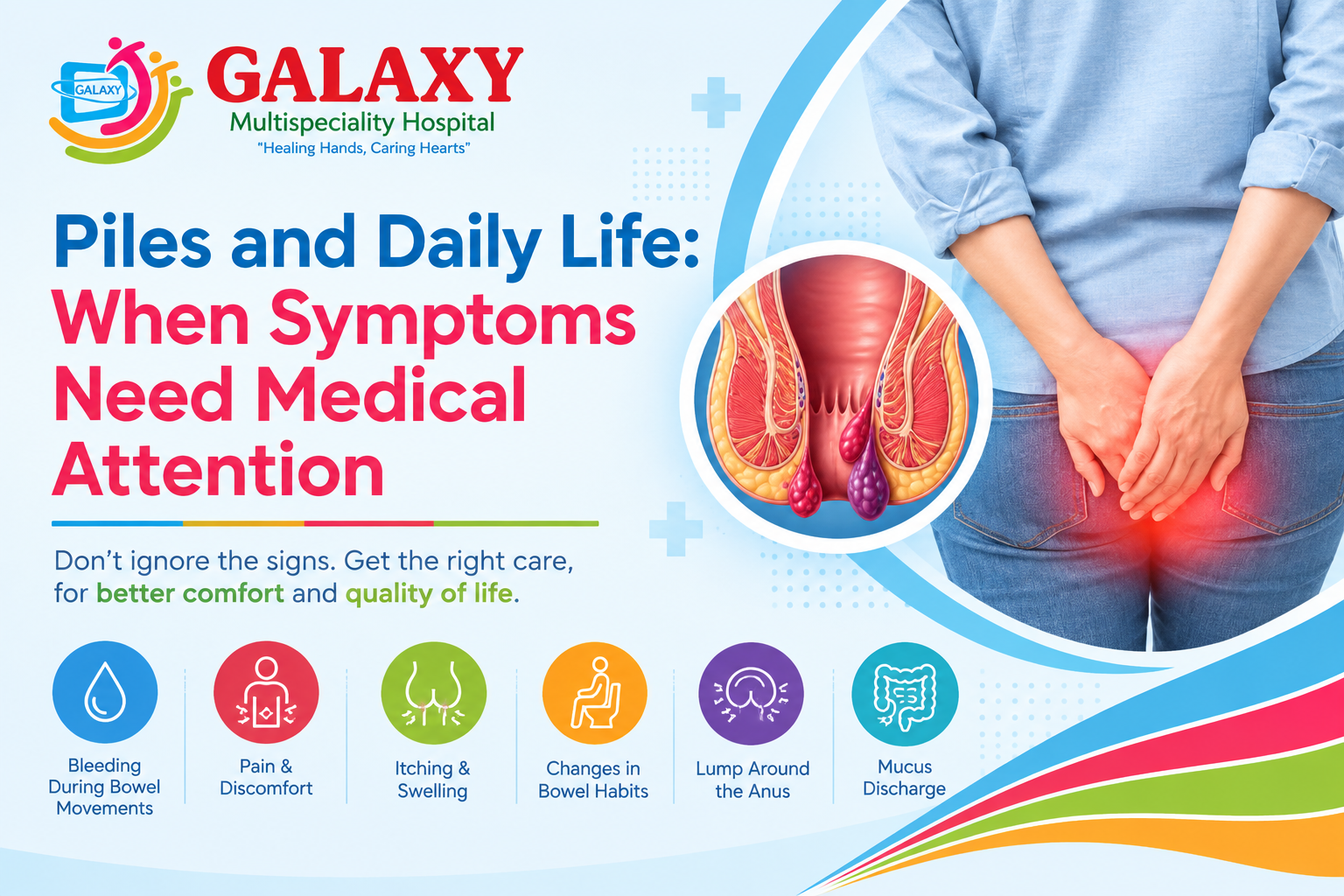
The pain is typically sharpest during a bowel movement and may continue as a burning or stinging sensation for several minutes to hours afterwards. Many patients also notice bright red blood on toilet paper or in the toilet bowl. Any episode of rectal bleeding should be medically evaluated to identify the underlying cause and ensure appropriate treatment, particularly to rule out other anorectal conditions such as piles (haemorrhoids) or fistula.
What Causes Anal Fissures?
Anal fissures are more common than most people realise and can affect individuals of any age. Several everyday habits and health conditions increase the risk:
- Chronic constipation — Hard, dry stools stretch and tear the anal lining; constipation treatment is often the first step toward fissure recovery
- Excessive straining — Pushing too hard during bowel movements increases pressure in the anal canal
- Chronic diarrhoea — Repeated loose stools irritate and weaken the anal tissues over time
- Low-fibre diet — A diet lacking fruits, vegetables, and whole grains leads directly to hard stools
- Childbirth — Vaginal delivery places considerable pressure on the pelvic floor and anal region
- Underlying digestive conditions — Inflammatory bowel disease (IBD) and Crohn’s disease increase susceptibility to fissures
Identifying your personal risk factors is an important step for both anal fissure treatment and prevention of future episodes. Our digestive health services at Galaxy Multispeciality Hospital can help assess and manage any underlying conditions contributing to your symptoms.
Symptoms You Should Not Dismiss
Many patients feel too embarrassed to discuss their symptoms with a doctor, and this delay is exactly what turns a manageable acute fissure into a chronic one requiring more intensive care. Watch for these warning signs:
- Sharp or cutting pain during bowel movements
- A burning or stinging sensation that lingers after passing stool
- Bright red bleeding during bowel movements
- A visible small crack or tear near the anal opening
- Itching or irritation around the anus
- Muscle spasms in the anal area
- Actively avoiding bowel movements because of the pain
If any of these symptoms have persisted for more than a few days, consulting a fissure specialist in Wadala at Galaxy Multispeciality Hospital can help you get an accurate diagnosis and begin the right treatment promptly.
Acute Fissures vs. Chronic Fissures
Understanding the type of fissure you have is essential to choosing the right treatment approach.
Acute Fissures
A fresh tear typically caused by a single episode of constipation or straining is classified as acute. With appropriate dietary changes, hydration, and conservative anal fissure treatment, most acute fissures heal naturally within two to four weeks.
Chronic Fissures
When a fissure fails to heal after six to eight weeks, it becomes chronic. Scar tissue may form around the edges, and the underlying muscle may be in persistent spasm, both of which prevent natural healing. Chronic fissure treatment typically requires advanced medical or surgical intervention. This is why early evaluation matters so much. A fissure that could have healed in weeks with simple measures may, if ignored, require fissure surgery in Wadala months later.
How Is an Anal Fissure Diagnosed?
Diagnosis is straightforward and does not involve uncomfortable invasive procedures. At Galaxy Multispeciality Hospital, the best fissure doctor in Wadala for your case will:
- Discuss your symptoms, bowel habits, and medical history in detail
- Perform a gentle visual examination of the anal area
- Assess whether any underlying digestive conditions are contributing
- Rule out other anorectal conditions, such as piles, fistula, or infections, through our colon and rectal care services
Accurate diagnosis is the foundation of effective anal pain treatment and the starting point for your recovery.
Fissure Treatment in Wadala – Your Options at Galaxy Multispeciality Hospital
Treatment is always personalised. Most patients begin with the least invasive approach and progress to more advanced options only if needed. Our general surgery and gastroenterology teams collaborate closely to determine the most appropriate treatment pathway for every patient.
Dietary and Lifestyle Modifications
For acute fissures, and as a foundation for all fissure care, lifestyle changes are the first line of treatment:
- Increasing daily fibre intake through fruits, vegetables, legumes, and whole grains
- Drinking 8 to 10 glasses of water per day to keep stools soft
- Responding promptly to the urge to pass stool rather than delaying
- Avoiding straining, allowing bowel movements to occur naturally
- Incorporating light physical activity to support healthy gut motility
Medications
Topical creams and ointments prescribed by your doctor can help relax the internal anal sphincter, improve blood circulation to the fissure site, and reduce anal pain. Stool softeners may also be recommended to make bowel movements more comfortable during healing. Medication is often highly effective for newly developed fissures.
Sitz Baths
Soaking the anal area in warm water for 10 to 15 minutes, two to three times a day, eases muscle spasms, improves local blood flow, and reduces discomfort. Many patients notice meaningful relief within just a few days of starting this routine.
Advanced Non-Surgical Treatments
For fissures that do not respond to conservative management, advanced non-surgical options, including laser fissure treatment, may be recommended. These approaches aim to reduce internal anal sphincter pressure and promote tissue healing with minimal discomfort and little to no recovery downtime.
Surgical Management
In cases of chronic or frequently recurring fissures, fissure surgery in Wadala may be the most appropriate solution. Modern procedures are safe, well-established, and highly effective when performed by experienced specialists through our general surgery services. The goal is to relieve sphincter pressure permanently and allow the fissure to heal fully.
When Should You See a Doctor?
Consult a fissure specialist in Wadala without delay if:
- Pain during bowel movements persists for more than three to five days
- Rectal bleeding occurs with multiple bowel movements
- Symptoms are disrupting your daily routine or sleep
- You have tried dietary changes and over-the-counter remedies without improvement
- The fissure keeps returning after appearing to heal
Early intervention through our digestive health services often leads to quicker recovery and significantly better long-term outcomes.
Preventing Anal Fissures
Once a fissure has healed, prevention becomes the priority:
- Prioritise fibre — Aim for 25 to 30 grams of dietary fibre daily from natural food sources
- Hydrate consistently — Adequate water intake is the simplest way to prevent hard stools
- Do not delay bathroom visits — Holding in stool allows it to harden and become more difficult to pass
- Avoid unnecessary straining — If a bowel movement is not happening naturally, wait rather than push
- Stay active — Even a 20 to 30 minute daily walk supports healthy bowel function
- Maintain hygiene — Keeping the anal area gently clean and dry helps prevent irritation
Frequently Asked Questions About Fissure Treatment in Wadala
Can an anal fissure heal on its own?
Many acute fissures heal with dietary changes and medications within two to four weeks. Chronic fissures, those lasting more than six to eight weeks, typically require advanced medical or surgical treatment and are unlikely to resolve without professional intervention.
Is fissure treatment painful?
Most treatments are designed specifically to reduce pain and improve healing. Conservative options such as medications and sitz baths are completely non-invasive. Modern procedures, including laser fissure treatment and surgical options, are minimally invasive and performed with patient comfort as a priority.
How long does it take for a fissure to heal?
Acute fissures may heal within two to six weeks with proper care. Chronic fissures can take longer and may require advanced chronic fissure treatment under specialist supervision.
Can fissures come back after treatment?
Yes, especially if the underlying causes, such as constipation and straining, are not addressed. Preventive dietary and lifestyle measures play a critical role in reducing the risk of recurrence after successful treatment.
When should I visit a doctor for fissure treatment in Wadala?
If symptoms such as anal pain, rectal bleeding, or discomfort persist for more than a few days, or if home remedies are not providing relief, it is time to consult the best fissure doctor in Wadala at Galaxy Multispeciality Hospital.
Serving Patients Across Central Mumbai
Galaxy Multispeciality Hospital provides expert fissure treatment in Wadala for patients from across central Mumbai, including:
- Wadala
- Dadar
- Matunga
- Antop Hill
- Sewri
- Parel
- Sion
- Chembur
Wherever you are in this part of Mumbai, comprehensive anorectal and digestive health care is now close to home.
Why Choose Galaxy Multispeciality Hospital for Fissure Treatment in Wadala?
Patients across central Mumbai choose Galaxy Multispeciality Hospital because we offer:
- Expert evaluation by experienced specialists through our gastroenterology and general surgery services
- Individualised treatment plans based on fissure type, severity, and duration
- The full spectrum of treatment, from dietary guidance to laser fissure treatment and fissure surgery in Wadala
- Comprehensive colon and rectal care with structured follow-up to ensure complete healing
- A respectful, judgment-free environment where sensitive symptoms are taken seriously
We recognise that anorectal conditions are often distressing to discuss. Our team is committed to making every patient feel comfortable, heard, and well cared for from the first consultation onward.
Conclusion
Pain during bowel movements is not something you should simply push through and hope it disappears. Early diagnosis is the key to preventing chronic fissures and avoiding unnecessary discomfort. If you are experiencing persistent pain, bleeding, or difficulty during bowel movements, seeking expert fissure treatment in Wadala at Galaxy Multispeciality Hospital can help you recover faster and return to your normal routine with confidence.
Our team is here to guide you at every step from your first consultation to complete recovery. Reach out to Galaxy Multispeciality Hospital, Wadala, today and take the first step toward lasting relief.